
 Skip to content
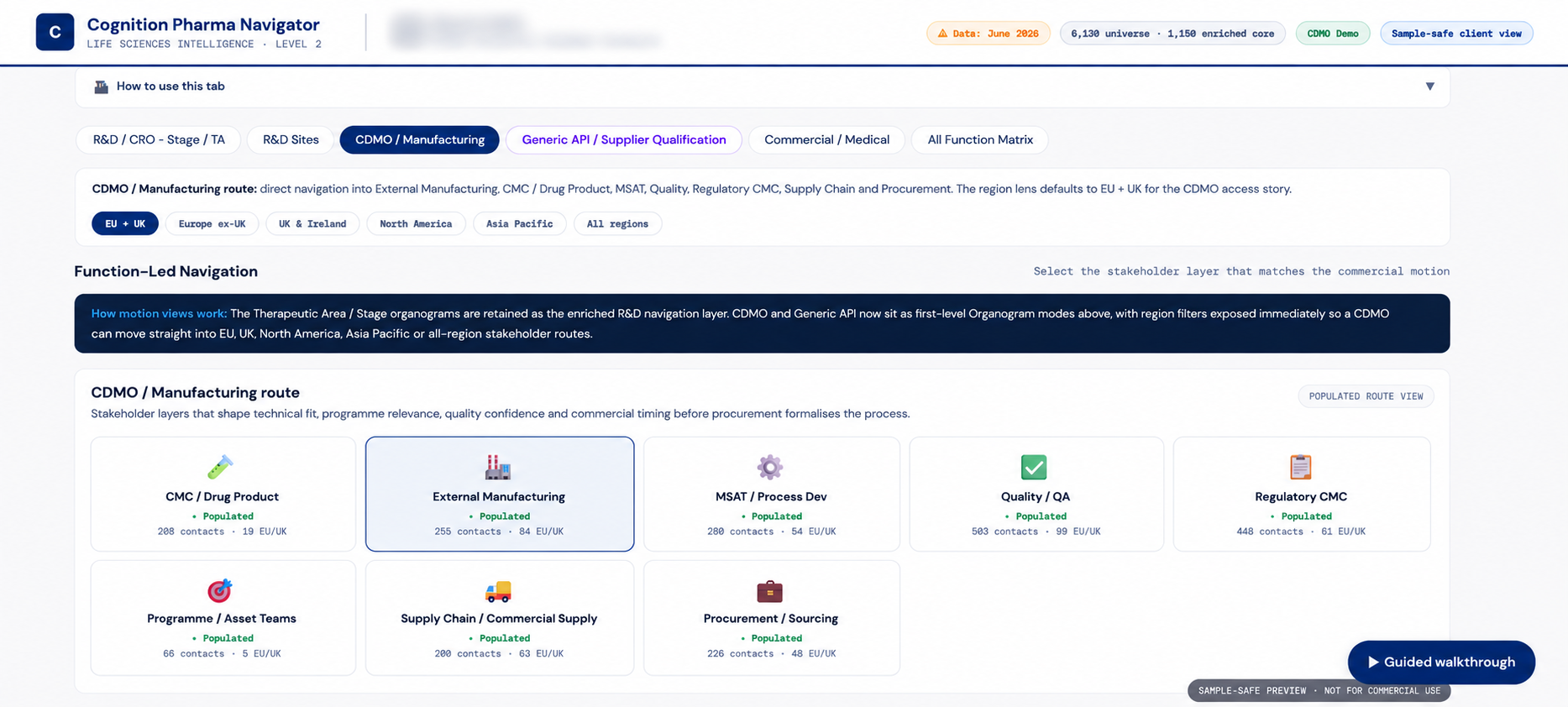
Navigator maps the real buying committee inside each priority account: who shapes the decision, how influence moves, and where your team needs to engage before procurement becomes the visible entry point.
Who This Is For
Navigator - Built for the Industries You Operate in

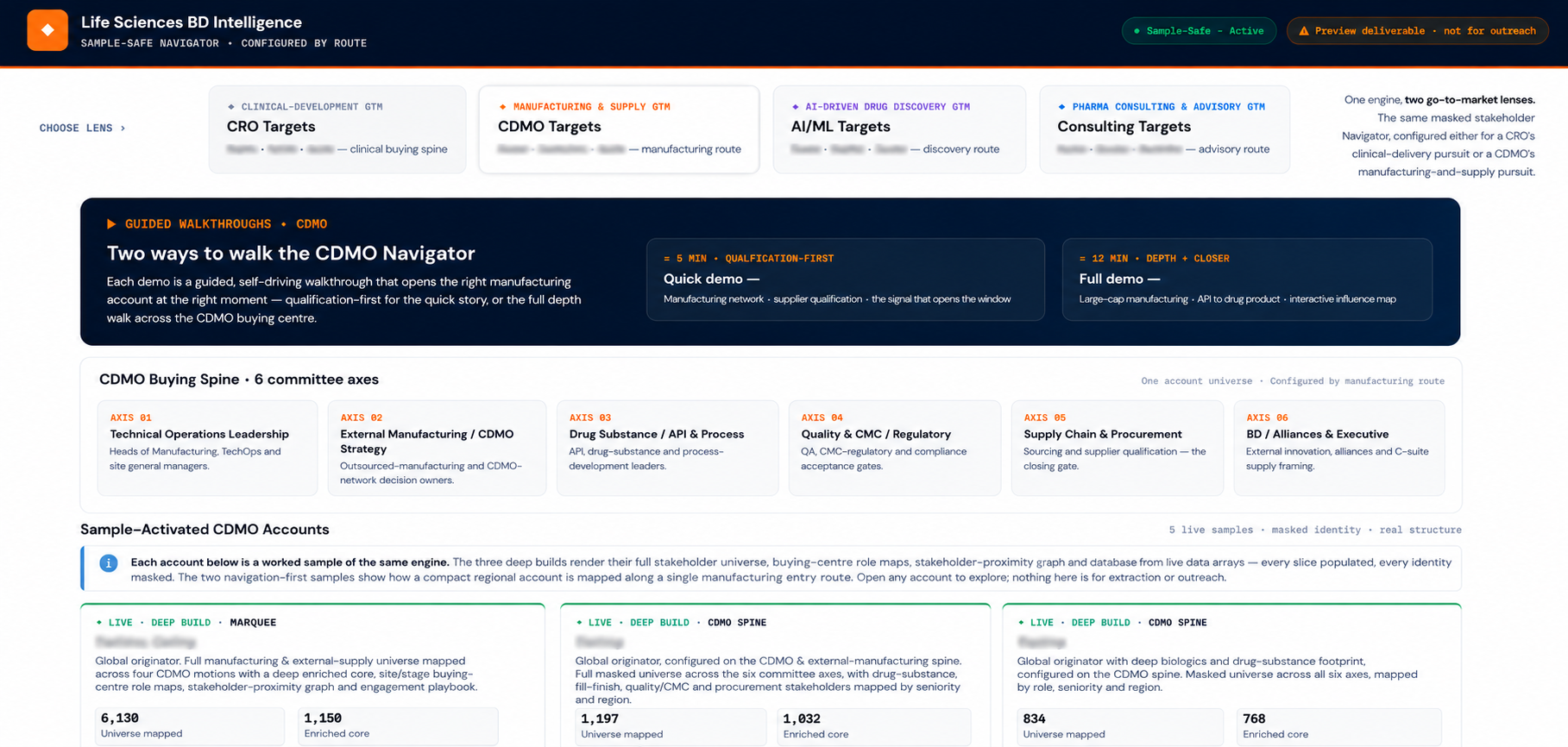
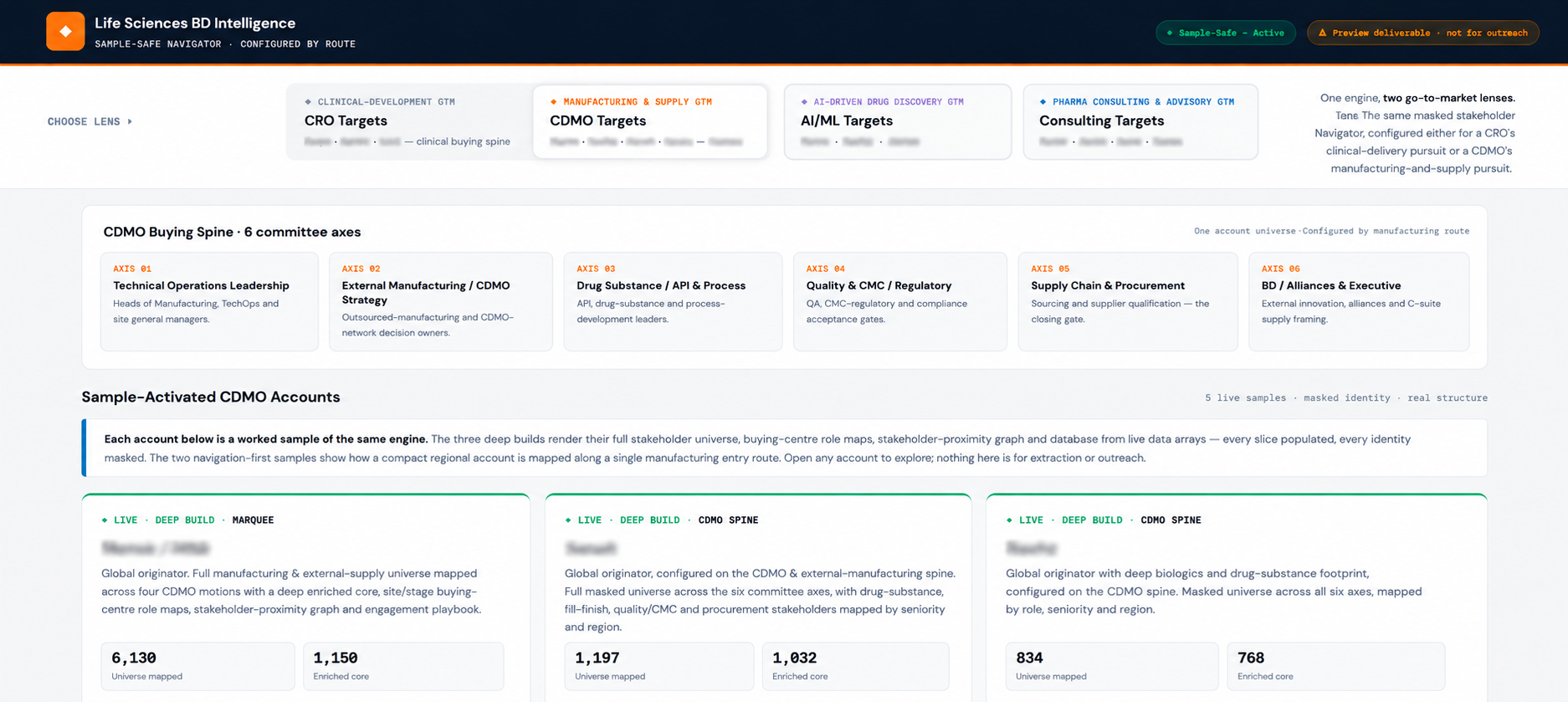
Pharma Navigator is the configured account intelligence layer for teams selling complex capabilities into pharma, including Contract Research Organisations (CROs), Contract Development and Manufacturing Organisations (CDMOs), AI/ML companies, and strategy and advisory firms.

Energy (To be launched soon)
Energy Navigator is the configured account intelligence layer for teams selling complex capabilities into the upstream and offshore O&G sector, tailored around the companies, stakeholders, and CAPEX project signals that shape commercial opportunities.
What It Solves
The Buying Committee Acts Before Procurement Sees it
Influence moves months ahead of the formal process, and titles rarely show where it actually sits.
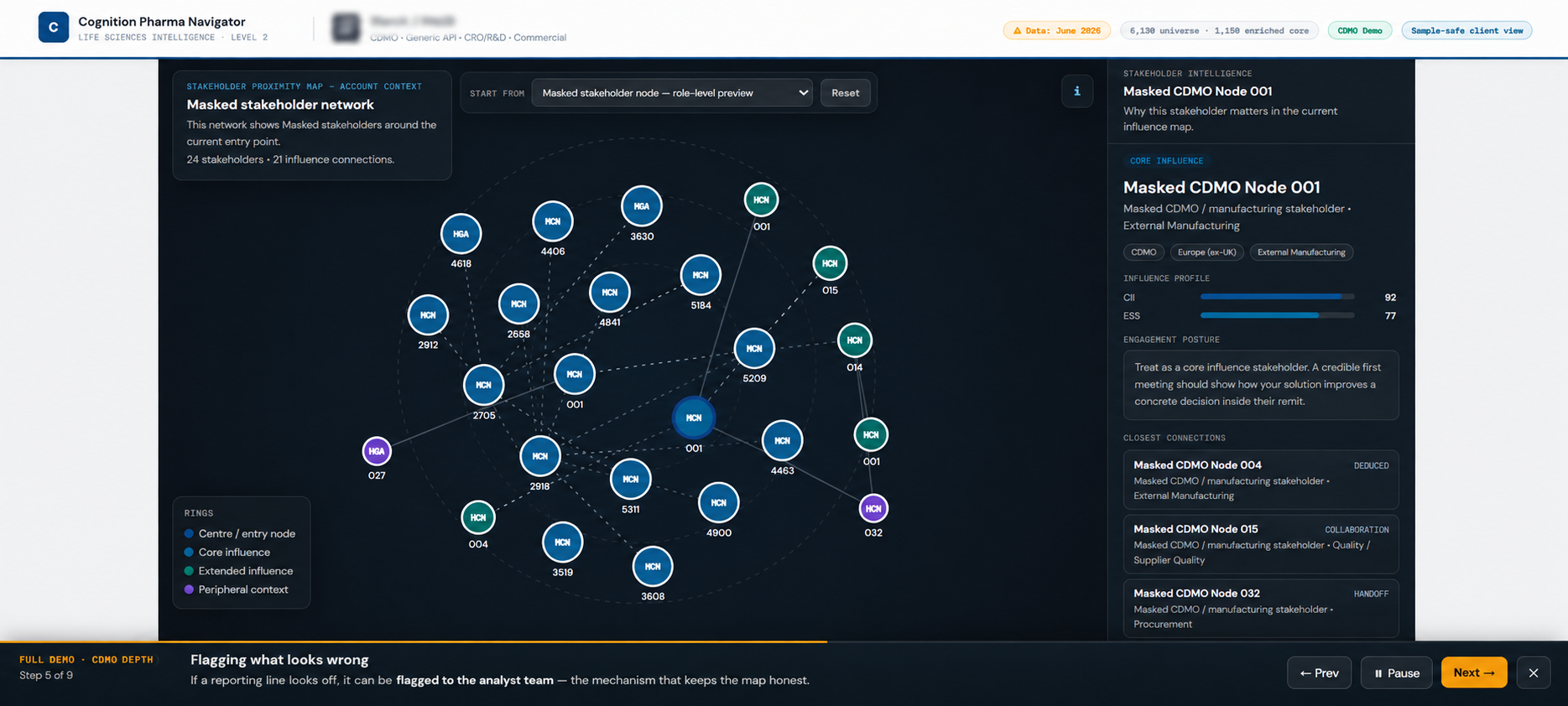
The technical evaluators, programme owners, and functional leaders shape the decision. They form their view early, often before a vendor name is ever discussed. Procurement opens the formal conversation much later, working from a scope others have already set. By then, outreach to the visible contact list is already too late. Navigator solves for the layer underneath: the real buying committee, and how the decision moves between its members.

Titles show rank,
not who decides
Titles and reporting lines show hierarchy, not influence. The person who blocks a deal is rarely the one with the biggest title.

Influence moves faster
than your account plan
Technical evaluators lose influence as a pursuit moves forward. Budget owners step in late. A committee mapped three months ago is already outdated.

Procurement arrives after
the decision is made
By the time an RFP lands, the direction is usually set. Outreach aimed at procurement arrives after the real conversation has already happened.
How It Works
Built Around How Your Market Actually Buys
Six categories of public-domain intelligence, reviewed by analysts and mapped to your buying committee.
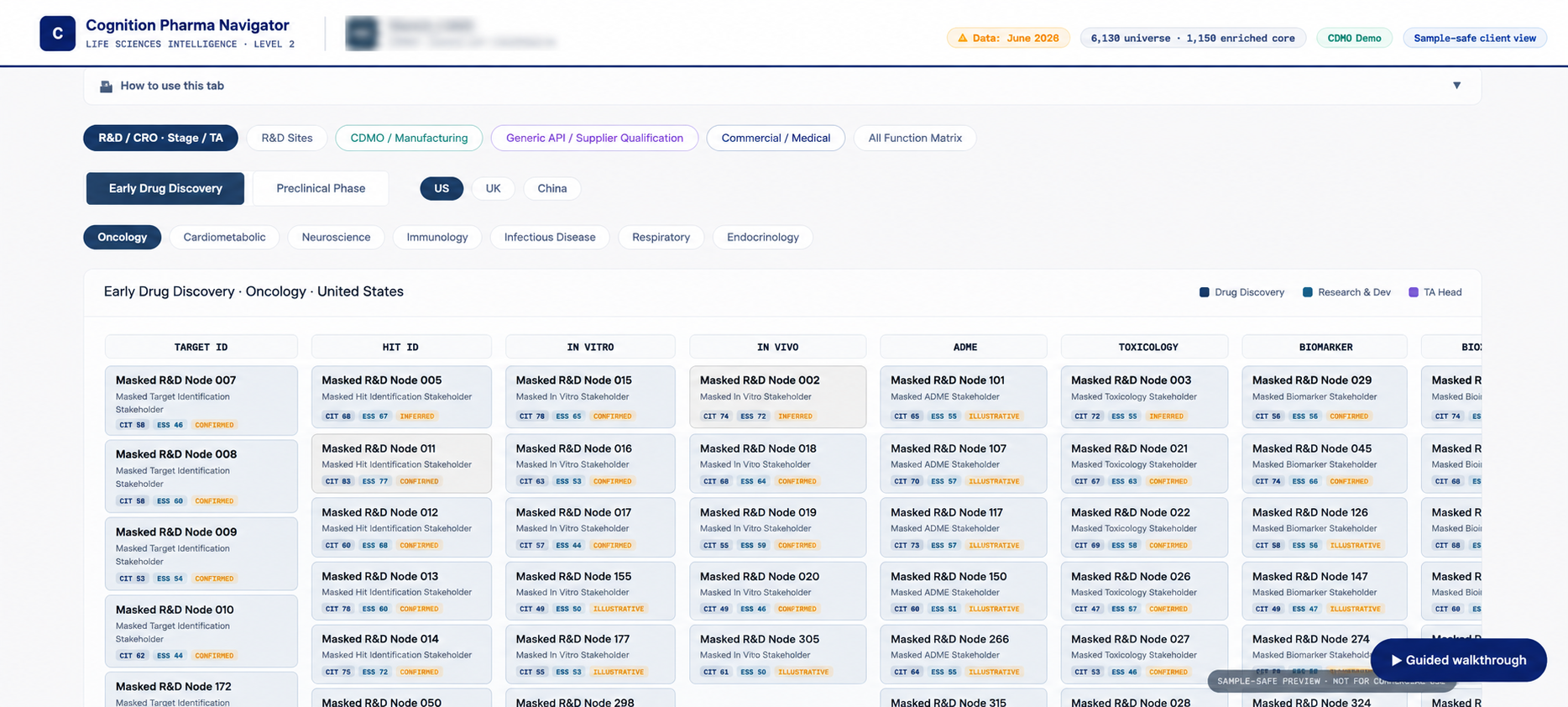
Navigator is delivered as a productised subscription, configured to your vertical, commercial motion and priority accounts. It draws on six categories of public-domain sources (corporate disclosures, hiring signals, patent activity, regulatory filings, published intelligence, portfolio data), with every record human-reviewed and mapped to the buying committee structure inside each priority account. The result: decision-ready intelligence for the pursuit, not another raw contact list.

Confidence ratings on every record
Every entry carries a rating reflecting how well-corroborated it is, so your team knows what to act on immediately and what still needs verification.

Role context (technical vs. commercial vs. procurement)
Each contact is tagged by the role they actually play in the decision, not their job title, so outreach can be pitched to the right conversation from the first touch.

Decision authority and influence signals
Navigator surfaces who holds formal sign-off and who shapes the outcome informally, surfacing the influencers a title alone would never reveal.

Sector-configured commercial motion
Configured to how your vertical actually buys. For instance, in pharma, that means mapping CDMO, CRO, AI/ML, and consultancy pathways as distinct routes to the same account.

Where the hidden cost shows up
The issue is not always the tool.
Often, it is the foundation the tool is being asked to act on. Select a card to see how the data layer constrains GTM performance.
Domain damage
Opportunity tax
Revenue gap
People moves
AI underperformance
AI-assisted outreach only performs as well as the account and contact intelligence it inherits. If that intelligence is wrong, AI makes the wrong action look polished.
Why Our Clients Work With Us
Navigator
Intelligence Configured to Your Commercial Motion

Buying-committee specificity
Focus engagement on the stakeholders who matter to the specific proposition, reducing wasted outreach and building the right relationships earlier.

Sector-specific analyst context
Understand which roles matter to the buying decision and why, enabling sharper prioritisation across complex accounts.

Subscription-based intelligence
Keep account intelligence current as stakeholders, priorities, and target accounts change, supporting better-informed pursuits over time.
Decision structure over contact data
See who influences, evaluates, and shapes the decision, enabling earlier multi-threading and stronger engagement across the buying committee.
Ready to Uncover the Buying Committee Inside Your Priority Accounts?

 Hi, This is Emma. Let’s get the conversation started!